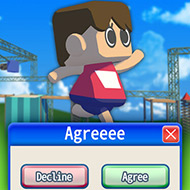
Jumping Shell presents a compact action challenge built around timing, rhythm, and careful movement. The experience focuses on guiding a fragile shell through layered obstacles where every jump carries weight. Jumping Shell feels approachable at first, yet it gradually demands sharper judgment, rewarding players who learn patterns and control momentum with precision.
Movement Logic and Core Controls
Jumping Shell centers on vertical and horizontal movement driven by deliberate input. The shell reacts instantly, but its weight and bounce must be respected. The game encourages learning how far and how high each jump travels rather than relying on rapid reactions. Jumping Shell teaches control by repeating familiar setups in slightly altered forms.
- Measured jump arcs that reward consistency
- Momentum-based landings affecting next moves
- Clear visual cues for safe timing
Because failure resets quickly, Jumping Shell supports repeated practice without frustration.
Obstacle Types and Environmental Rules
As players progress, Jumping Shell introduces obstacles that interact differently with the shell. Some surfaces alter bounce height, while others collapse after contact. The game builds challenge by combining known hazards instead of introducing randomness.
- Breakable platforms that limit hesitation
- Moving hazards that test rhythm awareness
- Directional boosters that change jump flow
Understanding how these elements interact is essential for mastering Jumping Shell.
Level Structure and Skill Growth
Levels in Jumping Shell are compact but layered. Each stage usually focuses on a specific idea, then adds a twist near completion. This structure helps players recognize mistakes and adjust strategy. The game avoids long stages, keeping focus sharp.
- Single-concept stages for focused learning
- Checkpoint placement that respects effort
- Optional challenge paths for advanced players
These design choices ensure Jumping Shell remains challenging without becoming overwhelming.
Player Questions and Advanced Techniques
A common question is whether Jumping Shell depends on speed. While timing matters, planning matters more. Another frequent topic involves shortcuts. Skilled players often chain jumps to skip hazards, using bounce control to reduce risk.
Jumping Shell stands out by emphasizing control over chaos. Its consistent physics, readable levels, and fair difficulty curve create a game that rewards patience, practice, and steady improvement.